
Western Red Cedar
Thuja plicata

Quick Care Guide
Prune: Light pruning to maintain shape; remove dead or damaged branches
Sunlight: Prefers full sun to partial shade
Water: Regular watering; needs moist, well-drained soil
Fertilize: Apply a slow-release fertilizer in spring
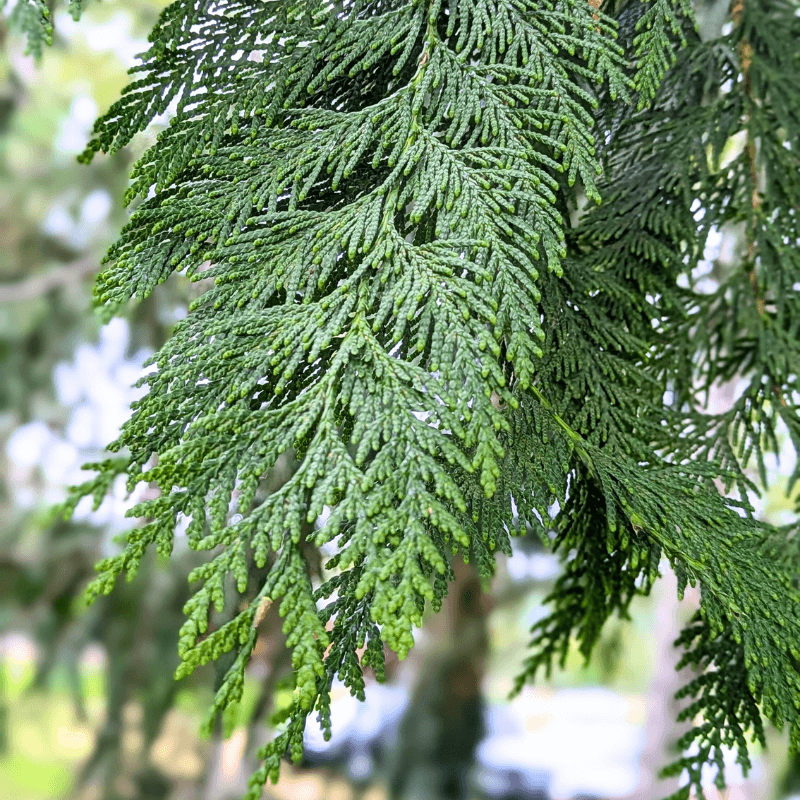
Leaves: Evergreen, scale-like, soft, and aromatic
Flowers: Small, inconspicuous cones in spring
Pruning
Western red cedar generally requires minimal pruning. Light pruning to maintain shape can be done in late winter or early spring before new growth begins. Remove any dead or damaged branches to keep the tree healthy and neat. Avoid heavy pruning, as this can cause stress to the tree and affect its overall appearance.
Watering
These trees prefer moist, well-drained soil but can tolerate some drought once established. Water regularly, especially during dry spells, to maintain soil moisture around the root zone. The soil should never be allowed to dry out completely, but avoid waterlogged conditions, as this can lead to root rot.
Leaves
The foliage of the Western red cedar is soft and scale-like, with a rich, aromatic scent. The evergreen leaves are a blue-green color and remain on the tree year-round, providing year-round beauty and shelter.
Sunlight
Western red cedar thrives in full sun to partial shade, though it does best with access to plenty of sunlight. It can tolerate some shade but will grow more slowly in these conditions. In areas with intense heat, partial shade is recommended to prevent the tree from drying out.
Fertilization
Western red cedars benefit from a slow-release fertilizer in early spring, which provides nutrients throughout the growing season. A balanced, all-purpose fertilizer is usually sufficient. Avoid over-fertilizing, as this can lead to weak growth and vulnerability to pests and diseases.
Flowers
The flowers of the Western red cedar are small, inconspicuous cones that appear in spring. Male cones are tiny and release pollen, while female cones develop into small, woody structures that mature in late summer to fall. These cones can be an attractive feature when viewed closely.