
Sweetgum Tree
Liquidambar styraciflua


Quick Care Guide
Prune: Prune in late winter or early spring to remove dead or damaged branches
Sunlight: Full sun to partial shade
Water: Moderate watering, prefers moist, well-drained soil
Fertilize: Fertilize in early spring with a slow-release fertilizer
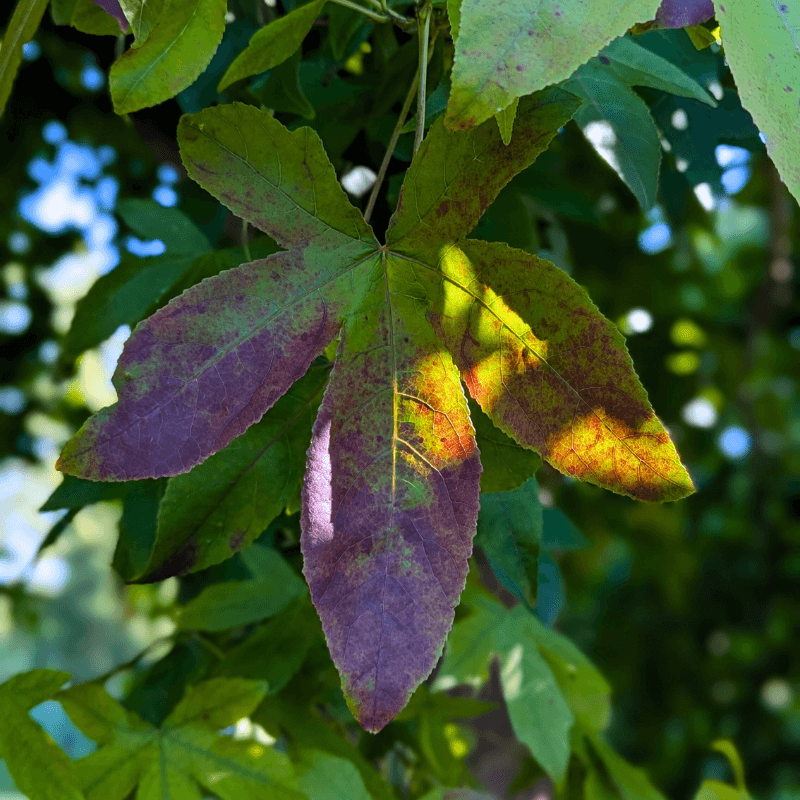
Leaves: Star-shaped, glossy green leaves with a bright fall color change
Flowers: Small, inconspicuous clusters in the spring
Pruning
Sweetgum trees benefit from pruning to remove dead or damaged branches and to maintain their shape. The best time to prune is during late winter or early spring, before new growth begins. Be cautious when removing branches, as the tree’s sap can be sticky. Avoid heavy pruning, as it can lead to a weak structure and increase susceptibility to diseases.
Watering
Sweetgum trees prefer consistently moist, well-drained soil. Water regularly during dry periods, particularly during the summer months, but ensure the soil does not become waterlogged. They are moderately drought-tolerant once established, but they perform best when given consistent moisture.
Leaves
The Sweetgum tree’s leaves are star-shaped with five lobes, glossy green in the summer. They are known for their vibrant color change in the fall, turning brilliant shades of yellow, orange, red, and purple. The leaves provide excellent seasonal interest, making this tree a popular choice for autumn displays.
Sunlight
Sweetgum trees thrive in full sun but can tolerate partial shade. However, to ensure the best growth and vibrant fall colors, plant them in a location where they can receive at least 6-8 hours of sunlight each day. In areas with harsh winters, partial shade can help protect the tree from extreme cold.
Fertilization
Fertilize the Sweetgum tree in early spring with a balanced, slow-release fertilizer to support healthy growth. Apply a general-purpose fertilizer with an NPK ratio of 10-10-10, but avoid fertilizing in late summer or fall, as this can encourage late growth that is more susceptible to winter damage.
Flowers
The flowers of the Sweetgum tree are small and inconspicuous, appearing as greenish-yellow clusters in the spring. These are followed by spiky seed pods, which mature in the fall. While not particularly showy, the flowers contribute to the tree’s overall aesthetic and help attract pollinators.