
Madonna Lily
Lilium candidum

Quick Care Guide
Prune: Cut back spent blooms; remove dead foliage
Sunlight: Needs full sun to partial shade
Water: Keep soil evenly moist, but well-drained
Fertilize: Fertilize in early spring with a balanced fertilizer
Leaves: Dark green, lance-shaped leaves
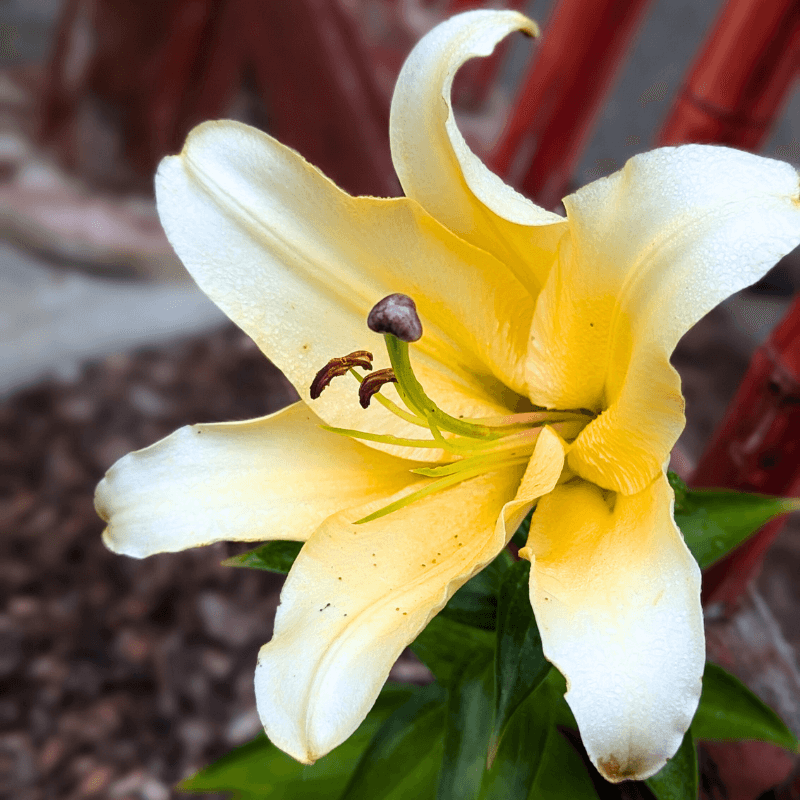
Flowers: White, trumpet-shaped flowers in late spring to early summer
Pruning
Madonna lilies require minimal pruning. After flowering, remove spent blooms to encourage tidy growth. In the fall, you can cut back any dead or damaged foliage to the ground. This will help the plant conserve energy for the next growing season. Be cautious not to remove any healthy leaves during the growing season, as they help the plant store energy for the next year.
Watering
Madonna lilies need consistently moist soil but should not sit in waterlogged conditions. Water deeply once a week, ensuring the soil stays evenly moist throughout the growing season. Reduce watering in the fall and winter when the plant is dormant. Ensure the soil is well-draining to prevent root rot.
Leaves
Madonna lily leaves are dark green, lance-shaped, and grow in a basal rosette. The foliage emerges in spring and is long and narrow, providing a striking contrast to the large, elegant flowers. The leaves persist through the growing season and die back after blooming.
Sunlight
Madonna lilies thrive in full sun but can tolerate partial shade, especially in hotter climates. Ideally, they should receive 6+ hours of direct sunlight a day to encourage optimal blooming. If grown in too much shade, the plant may become leggy and produce fewer flowers.
Fertilization
Apply a balanced fertilizer (10-10-10) in early spring when new growth begins. Fertilize again after flowering to encourage strong foliage for next year’s blooms. Avoid over-fertilizing, as this can result in excessive leaf growth at the expense of flowering.
Flowers
The Madonna lily produces large, trumpet-shaped white flowers with a sweet fragrance. The blooms appear in late spring to early summer and are often used in floral arrangements. The flowers have six petal-like tepals that curve back, giving them a graceful, star-shaped appearance.