
Japanese Stewartia
Stewartia pseudocamellia


Quick Care Guide
Prune: Prune to shape in late winter or early spring before new growth begins
Sunlight: Full sun to partial shade
Water: Regular water, but allow soil to dry out between waterings
Fertilize: Fertilize with a balanced fertilizer in spring
Leaves: Glossy, dark green leaves
Flowers: White, camellia-like blooms in late spring to early summer
Pruning
Japanese Stewartia benefits from light pruning to maintain its shape and remove dead or damaged wood. The best time to prune is in late winter or early spring before new growth starts. Avoid heavy pruning, as this can affect the plant's natural structure. If you want to shape it or remove any crossing branches, do so carefully to maintain the tree’s graceful form.
Watering
Japanese Stewartia prefers consistently moist but well-drained soil. Water the plant regularly, especially during dry spells, but be sure to allow the soil to dry out slightly between waterings. Avoid waterlogged soil, which can lead to root rot. Mulching around the base can help retain moisture and keep the roots cool.
Leaves
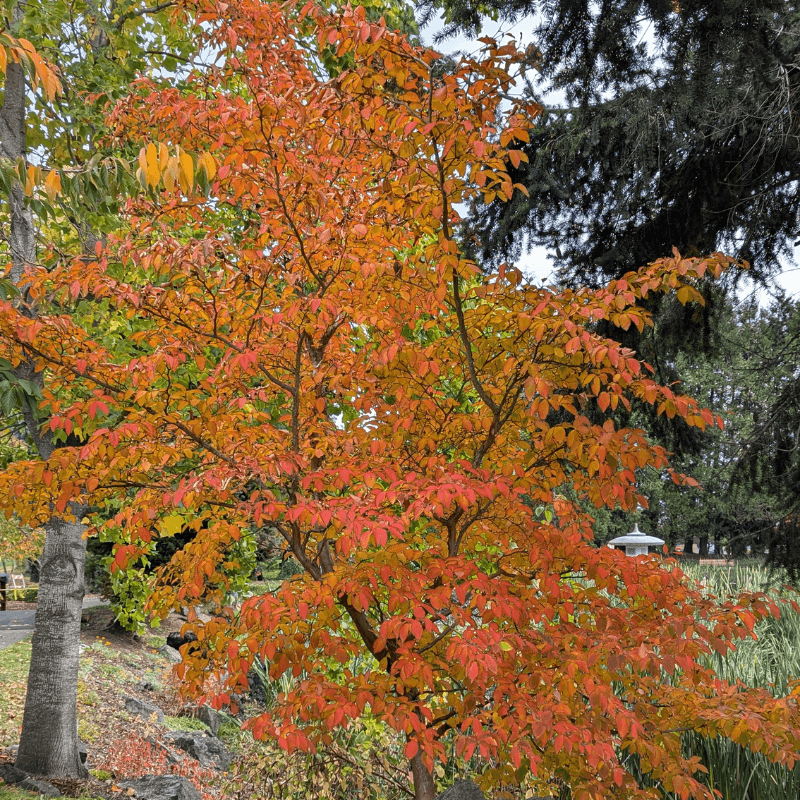
The glossy, dark green leaves of Stewartia are a standout feature. They turn a brilliant mix of red, orange, and yellow in the fall, adding seasonal interest to your garden. The leaves also provide a lovely texture, contributing to the plant’s overall aesthetic appeal.
Sunlight
Stewartia thrives in full sun to partial shade. While it will tolerate some shade, it produces the best flowers and fall color in bright, well-lit conditions. In areas with hot summers, partial shade can help protect the tree from scorching.
Fertilization
Feed Stewartia with a balanced, slow-release fertilizer in early spring, just before the new growth begins. A 10-10-10 or similar formulation will promote healthy growth. Avoid fertilizing late in the growing season, as this may encourage late growth that won’t harden off before the first frost.
Flowers
Stewartia produces stunning, white, camellia-like flowers with orange stamens. These flowers bloom in late spring to early summer, adding a touch of elegance to the landscape. Each flower lasts just a few days, but the tree will continue to bloom over several weeks, making it a seasonal showstopper.