
Creeping Sedum
Sedum spp.


Quick Care Guide
Prune: Trim to shape or control spread
Sunlight: Full sun to part shade (at least 4–6 hours of sun)
Water: Drought-tolerant; water occasionally once established
Fertilize: Rarely needed; feed lightly in spring if desired
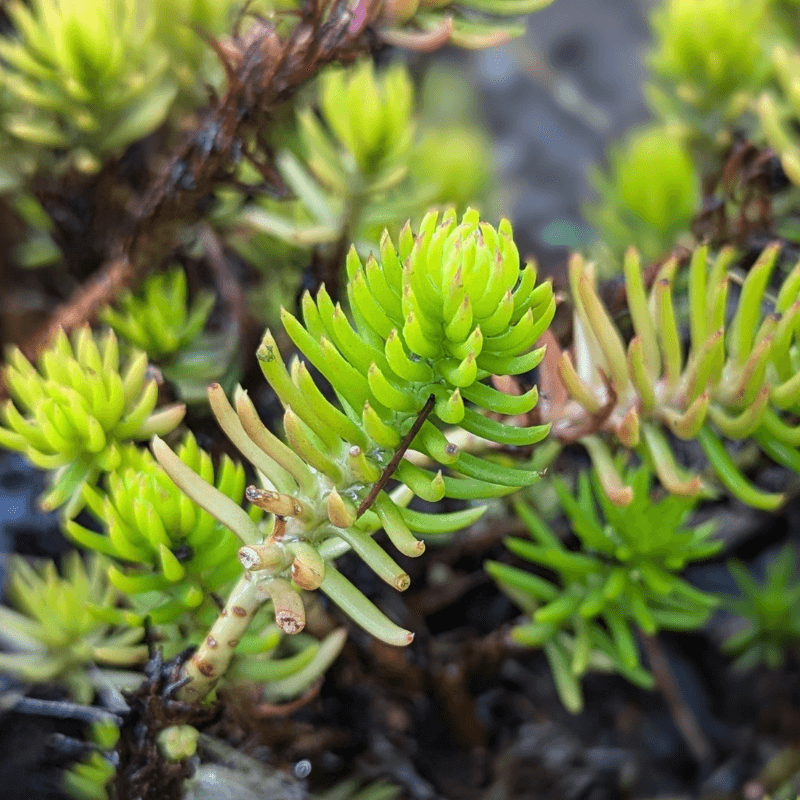
Leaves: Fleshy, succulent leaves in green, gold, or red tones
Flowers: Small star-shaped blooms in summer
Pruning
Creeping sedum requires little pruning, but you can trim it back in early spring to maintain a tidy appearance or control its spread. If the plant becomes leggy or overgrown, simply snip back the stems to encourage bushier growth. Spent flower stalks can also be removed to keep the plant looking neat.
Watering
This plant is drought-tolerant and thrives with minimal watering once established. Water deeply but infrequently, allowing the soil to dry out between waterings. Overwatering can lead to root rot, so well-drained soil is essential.
Leaves
Creeping sedum has succulent leaves that store water, making it an ideal choice for dry or rocky areas. Leaf color varies by variety, ranging from bright green to gold, red, or variegated. The foliage often turns more vivid in cooler temperatures.
Sunlight
Creeping sedum thrives in full sun but can tolerate partial shade. It prefers at least 4 to 6 hours of direct sunlight daily for best color and bloom production. Varieties with golden or red foliage will show their most vibrant hues with more sun exposure.
Fertilization
Creeping sedum generally doesn’t need fertilizing. If the plant seems sluggish, you can apply a diluted, balanced fertilizer (such as 10-10-10) in early spring. Avoid over-fertilizing, which can cause weak, leggy growth.
Flowers
Tiny star-shaped flowers bloom in clusters atop the foliage, typically in mid to late summer. Flower colors range from yellow and white to pink, depending on the variety. These blooms are attractive to pollinators like bees and butterflies.