
American Rhododendron
Rhododendron macrophyllum

Quick Care Guide
Prune: Lightly after flowering to shape and remove spent blooms
Sunlight: Partial shade to dappled sunlight
Water: Weekly; prefers moist, well-draining acidic soil
Fertilize: Feed with acid-loving fertilizer in early spring
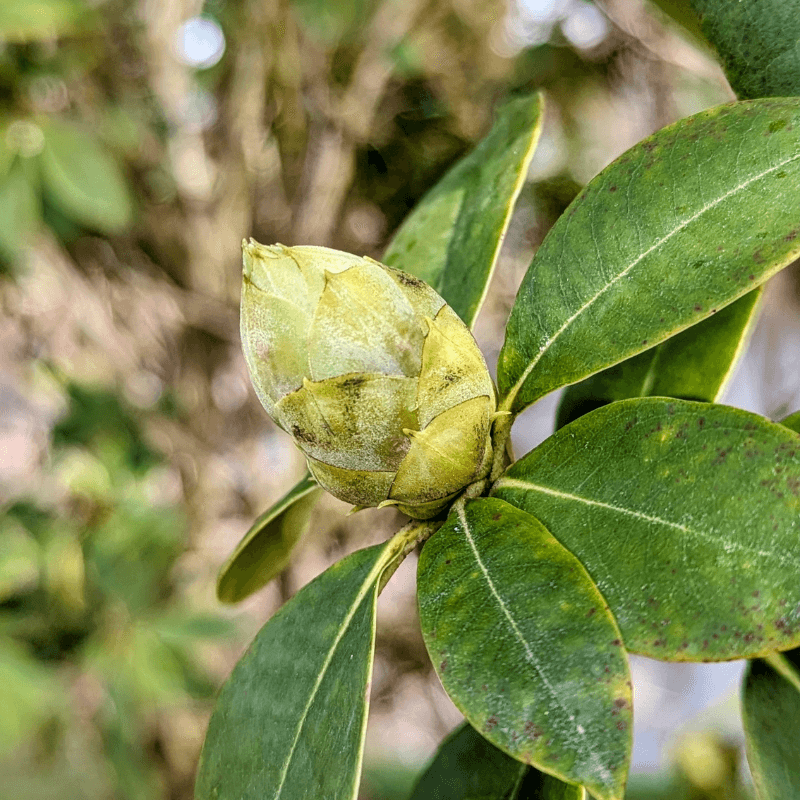
Leaves: Large, leathery, evergreen leaves
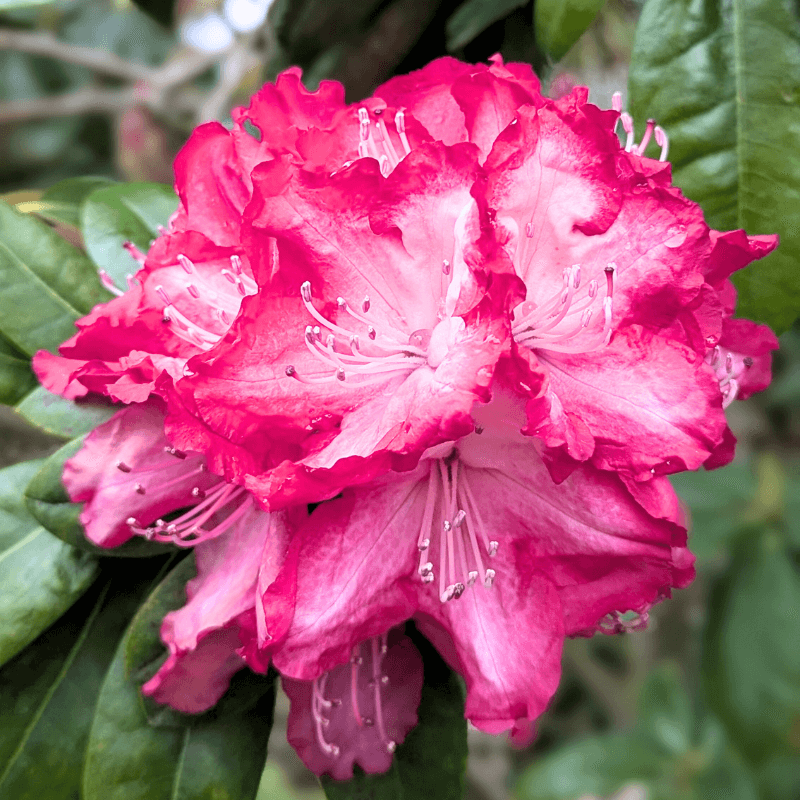
Flowers: Clusters of pink to purple blooms in late spring
Pruning
American Rhododendrons require minimal pruning but benefit from occasional maintenance to keep them healthy and attractive. Prune just after flowering to remove spent blooms and encourage bushier growth. Avoid heavy pruning, as this can reduce the next season’s blooms. Remove any dead or damaged branches to improve air circulation and overall plant health.
Watering
American Rhododendrons thrive in consistently moist but well-drained soil. Water deeply once a week, more often in dry conditions. Be cautious not to let the soil become soggy, as this can lead to root rot. A thick layer of mulch can help retain moisture and keep roots cool.
Leaves
The leaves of American Rhododendron are large, leathery, and evergreen, providing year-round interest. They are typically dark green with a slightly glossy surface and can droop slightly in extreme cold as a natural defense mechanism.
Sunlight
These native shrubs prefer dappled light or partial shade, especially in hotter climates. While they can tolerate some morning sun, too much direct sunlight may scorch their leaves or cause them to wilt. An ideal spot would be one with protection from harsh afternoon rays, such as under tall trees or on the north or east side of a building.
Fertilization
Fertilize in early spring with a slow-release fertilizer formulated for acid-loving plants, such as azaleas or camellias. Avoid fertilizing in late summer or fall, as this can stimulate new growth that may not harden off before winter. Always water thoroughly after feeding.
Flowers
This species produces showy clusters of trumpet-shaped flowers ranging from pink to lavender, often with darker spots on the upper petals. Blooms appear in late spring and are highly attractive to pollinators like bees and hummingbirds. Their vibrant display is a highlight of the Pacific Northwest landscape.